
Under Pressure

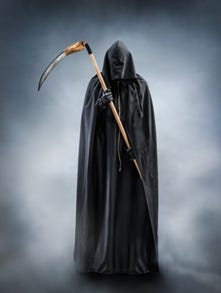
I can sense it. You’ve been fretting that I’ve been absent from this forum for a while. The reason is because I’ve been unwell, culminating in a brief stint in hospital. Okay, okay, hold the flowers, and particularly don’t send any of those plastic, heart-shaped balloons. They’re an affront to both the environment and good taste.
The last time I was in hospital a friend brought in a curry. I’d always thought that fruit, more specifically grapes, was where the line was drawn when visiting the sick, so imagine my surprise. He assured me that there were facilities just down the hallway where I could heat my curry but, honestly, I just couldn’t picture the aroma of rogan josh wafting through the ward, while my fellow inmates tussled over their boiled gurnard in white sauce. Besides, he’d forgotten the naan.
But my point in mentioning this most recent brush with the Grim Reaper is not to elicit sympathy. Rather it is to reveal that I have reached an age where I have become a burden on the system. I’ve become a tax on the taxpayer. I take more than I give. Well, that’s not entirely true because, due to a rather hefty mortgage, and because we demand a lifestyle that involves luxuries, such as food and shelter, we cannot maintain that lifestyle on the pittance we can leverage from our fellow taxpayers. Consequently, we still have our noses firmly fixed to the daily grindstone of manual labour. We rise each morning and continue to chip away at the metaphorical coal face and, as a reward, we’re allowed to pay taxes. Part of those taxes accrue back to us as a “pension”. It’s complicated, isn’t it? The money is laundered through the system, and some is creamed off and awarded to bureaucrats and politicians who might otherwise remain unemployed. This way, everyone gets a bite at the cherry. Interestingly, did you know that pensions are a mediaeval concept, whereby a liege paid money to a vassal to retain his loyalty? I feel no sense of loyalty to the liege who pays my pension, because she leverages those funds from the downtrodden working classes, of which I am a part. But I digress.
No sooner was I in my cubicle, dressed only in one of those comically ridiculous hospital gowns that leave you feeling dangerously exposed from the rear, no sooner had nurse Holly hooked me up to my monitor, than I was approached by a fifteen-year-old girl.
“Hello,” she said. “How are you?” Given that we were in the accident and emergency department, and given that few people are there because they’re feeling chipper, I assumed the question to be rhetorical. “I’m Doctor So-and-so,” she continued.
Really? I searched her pre-pubescent face for a trace of irony and found none. I quickly examined the stethoscope that dangled from her young, unblemished neck to determine whether it was one of those plastic ones you can get from the Two Dollar Shop. It wasn’t. Why, I wondered, was this young person not whiling away her life scrolling through Instagram, instead of posing as a medical practitioner?
The x-ray, she said, indicated that there might be a problem with my caudia equina.
“Horses?” I asked, surprised, because we have none.
Pressure, she implied darkly. I would be amazed, she said, at the far-reaching implications of pressure on the caudia equina. Had I, for example, noticed any discomfort in my perineum?
“Wash your mouth out with soap, girl!” I said.
Time passed, with the person in the neighbouring cubicle yelping because his stomach hurt. Man up, I felt like telling him. Just be thankful you don’t have pressure on your caudia equina. Meanwhile, people were wheeled by with their bodies in various states of disrepair, tattered and bloody, then wheeled out again, fully or partially repaired. Or not. And around ten in the morning old people began dribbling in. This had been predicted by the nurse who admitted me. “They get up in the morning,” she’d said. “They get up, these old people, and then they realise there’s something wrong with them, and then they come in.”
Later, much later, it seemed, Doctor Sam breezed in. This was more like it! Doctor Sam was at least old enough to shave, or had at least recently been close to a razor. The two days of stubble on his face were testament to that. He evinced an ebullient air that belied his tired eyes. It was an air that inspired confidence. It suggested that he merely laughed in the face of sickness and disease. His gung-ho approach reminded me of the physician who attended my grandmother during her final days, a man who dressed as a character from a western movie, complete with a sheriff’s star. He was a man who was hell bent on making the transition from this world to the next fun. Consequently, my grandmother spent her last hours believing that she was being treated by Wyatt Earp, and that she was headed, not for her just and eternal rest, but for the OK Corral.
The good news, Doctor Sam advised me, was that my caudia equina was in the clear. Hunky dory. No pressure. His opinion, he said, and he’d be the first to acknowledge that it might not be worth the paper it was written on, even though it wasn’t written on paper, ha ha, was that the symptoms were brought on by an infection, and that a darned good dose of antibiotics would see me right.
And as I hobbled out into the blustery heat of a Canterbury Nor ’wester, drained and exhausted after a sleepless night, prescription in hand, I passed the notices pasted to windows and doors. The nurse’s strike. It would be happening the next day. Twenty-two more nurses were needed for the department, these notices said. Wards were dangerously understaffed, they said. Nurses were worth more, they said.
And yes, for having to deal with us, the halt and the lame, the mentally and physically damaged, yes, they are worth more. They’re possibly worth their weight in gold.